
Arizona isn’t supposed to be hail country. October 2026 said otherwise.
Between October 20 and 22, a strong low pressure system pushed several rounds of severe thunderstorms across central and eastern Arizona. According to the National Weather Service, two supercells did most of the damage in the Valley: the first hit Chandler and Mesa on the evening of October 20, and a second, more destructive cell tracked across Central Phoenix the next afternoon. Golf ball size hail was reported, windshields were shattered across the metro, and Arizona saw its first tornado watches in years. Forecasters pointed out the setup looked almost identical to the October 2010 storms, which caused an estimated $2.7 billion in insured losses.
If you own or manage an apartment community, office building, retail center, or HOA, here is what you need to know about protecting your asset, understanding your options, and getting your property back to the way it was built.
What Hail Does to Arizona Buildings
Hail damage in the desert doesn’t always look like it does in Colorado or Texas. Our building stock is different, and so is the damage pattern. The most common issues we see on multifamily and commercial properties:
- Tile roofs: Cracked, chipped, or displaced concrete and clay tiles. A cracked tile can let water reach the underlayment, and in our heat, a damaged underlayment fails fast.
- Foam (SPF) and coated roofs: Punctures and fractures in the protective coating expose the foam to UV, which breaks it down quickly if it isn’t recoated.
- Low slope roofs (TPO, modified bitumen, BUR): Bruising, fractured membranes, and damaged seams that often aren’t visible from the ground.
- Shingle roofs: Granule loss, cracked mats, and soft spots.
- Paint and stucco: Chips, spatter marks, cracked stucco, and failed paint on windward elevations.
- Metal components: Dented carports, gutters, downspouts, flashing, fascia, railings, and rooftop HVAC fins.
- Balconies and decks: Cracked or punctured waterproof deck coatings, which can lead to water intrusion into the structure below.
- Windows, screens, awnings, and signage: Broken glass, torn fabric, and damaged fixtures.
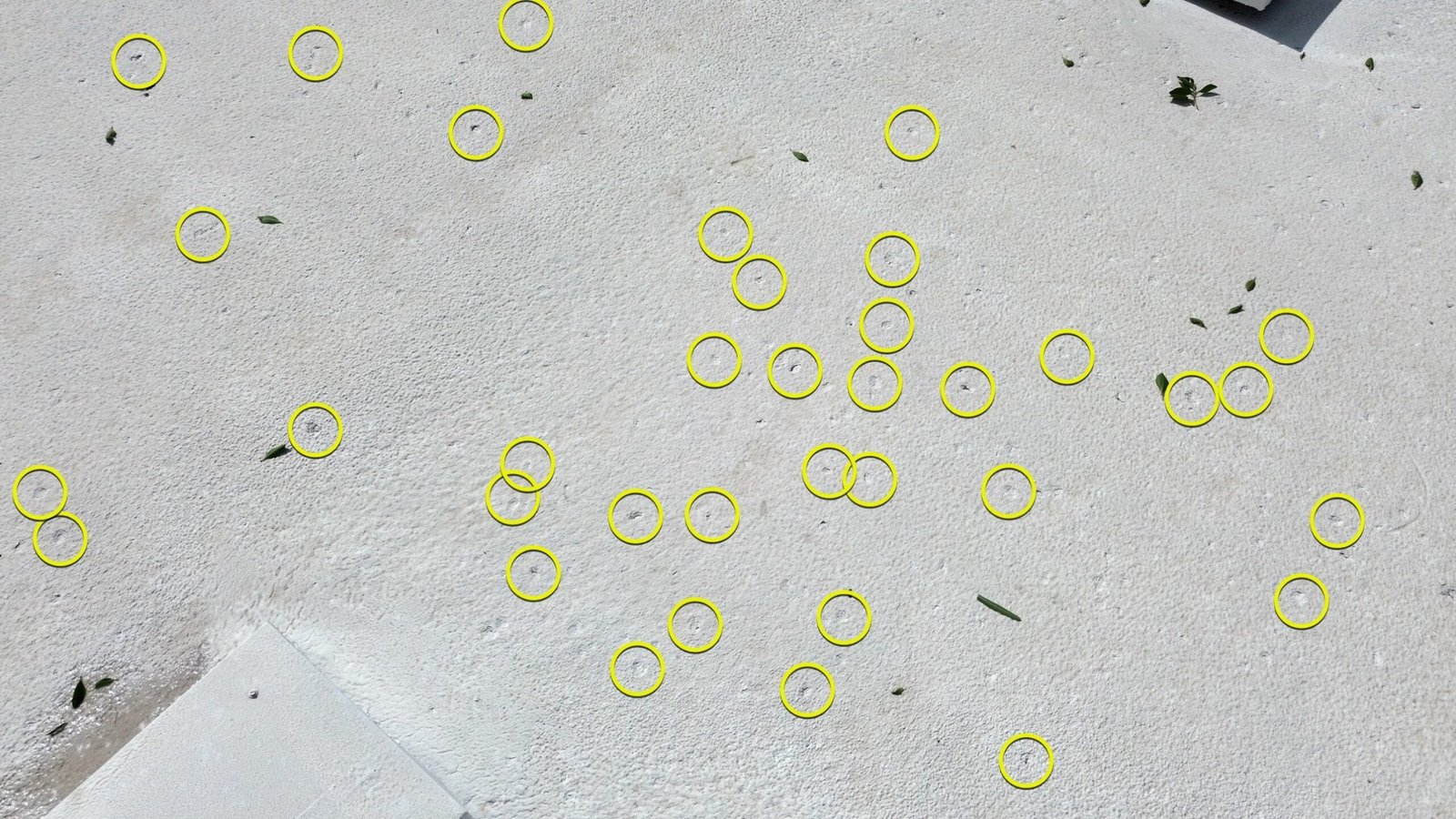
The most expensive damage is often the damage you can’t see from the parking lot. A roof that looks fine from the ground can have dozens of fractured tiles or bruised membrane areas that start leaking at the next monsoon. (If you have ever traced what a single leak really costs, our breakdown of the hidden costs of a roof leak in multifamily is worth a read.)
Your First 72 Hours After a Hail Storm
- Make the property safe. Check for hazards like broken glass, fallen limbs, and active leaks. Communicate with residents or tenants about what happened and what’s next.
- Document everything. Take date stamped photos and video of every elevation, roof area, carport, and interior leak. Note the date and time of the storm.
- Prevent further damage. Most policies require you to mitigate. Tarp active leaks, board broken windows, and keep receipts for all emergency work.
- Notify your carrier promptly. Policies have reporting deadlines. Late notice can complicate or jeopardize a claim.
- Review your policy. Many commercial policies carry a separate wind and hail deductible, often a percentage of the insured value rather than a flat amount. Know your number before you decide how to proceed.
- Get a professional inspection. Have a licensed contractor who knows commercial and multifamily construction assess the full property, including the roof.
Your Options After Hail Damage
Every property and every policy is different, but most owners end up choosing one of these paths.
Option 1: File an Insurance Claim
If the damage exceeds your deductible, a claim is usually the right move. The general process looks like this:
- Your carrier assigns an adjuster who inspects the property and writes a scope of loss.
- Your contractor reviews that scope against the actual conditions on site and provides documentation if items were missed.
- The carrier issues payment, often in two parts: actual cash value up front, and recoverable depreciation once the work is complete (if your policy is written on a replacement cost basis).
- Work is completed and closeout documentation is sent to the carrier to release any remaining funds.
A few policy terms worth asking your agent about: replacement cost vs. actual cash value, ordinance or law coverage (which can pay for code required upgrades), and how your policy handles matching when repaired areas won’t match undamaged areas.
Option 2: Self Fund Targeted Repairs
If the damage falls below your deductible, or you’d rather not file, a targeted repair scope can address the critical items first: roof leaks, compromised coatings, and anything that threatens the building envelope. The key is a clear, prioritized scope so you’re spending on what protects the asset.
Option 3: Combine Storm Repairs With Planned Capital Work
If an exterior repaint, roof replacement, or carport upgrade was already in your capital plan, a storm event can be the right time to do it. Insurance pays for the covered damage, and you fund the upgrades or betterment separately. Done right, you get the full project for less out of pocket, completed once, with one disruption to residents instead of two.
Option 4: Phase the Work Across a Portfolio
For owners and management companies with multiple impacted properties, phasing by priority (active leaks first, cosmetic last) keeps residents protected while managing cash flow and contractor capacity.
Watch Out for Storm Chasers
After every major hail event, out of state crews and unlicensed contractors flood the Valley. Before you sign anything:
- Verify the license on the Arizona Registrar of Contractors website and confirm it covers the work being performed.
- Confirm insurance, including general liability and workers’ compensation.
- Ask for commercial and multifamily references, not just residential.
- Be cautious of anyone who offers to negotiate your claim for you. In Arizona, only a licensed public adjuster can represent you in negotiating a claim. A good contractor will document the damage and support the process, not take it over.
- Ask where they’ll be in two years when you need warranty service.
What “As Built” Means and Why It Matters
The goal after a storm isn’t just to patch the damage. It’s to restore your property to its as built, pre loss condition: the same materials, the same systems, the same colors, the same manufacturer specifications, and current code where it applies.
That matters for three reasons. It protects your property value. It keeps manufacturer warranties intact. And it keeps your community looking consistent, instead of a patchwork of mismatched tile, mismatched paint, and mismatched metal that residents and prospective tenants notice right away.
How American Exterior Systems Helps
American Exterior Systems is a Phoenix based general contractor specializing in exterior renovations for multifamily and commercial properties across the Southwest. We hold a KB1 dual license and are licensed in Arizona and Utah. When hail hits, here is how we help you get back to as built condition:
Full property inspection and documentation. We inspect every roof area, elevation, carport, balcony, and metal component, and deliver a detailed photo report with the damage clearly mapped by building and location.
A clear, line item scope. We build a detailed scope and estimate that matches how carriers review claims, so your adjuster has what they need and nothing gets overlooked.
On site with your adjuster. We can meet your adjuster at the property, walk the damage together, and provide supporting documentation for anything missed in the original scope. We support the process; you stay in control of your claim.
Emergency protection. Temporary tarping and leak mitigation to protect the building and your residents while the claim is processed.
One contractor for the whole exterior. Paint, roofing, stucco, wood replacement, carports, metal repairs, balconies and stairways, and waterproof deck coatings, all under one contract and one point of contact. No juggling five trades.
Built for occupied communities. We schedule around residents, communicate building by building, and keep your onsite team informed, so your community keeps running while the work gets done.
True as built restoration. We match original materials, colors, and systems, and we document everything at closeout so you can recover depreciation and keep clean records for your lender and your next buyer.
Get Your Property Inspected
Hail damage gets worse with time, and more storms are in the forecast. If your property was in the path of the October storms, or you’re not sure, schedule a storm damage inspection with American Exterior Systems. We’ll tell you exactly what we find, what your options are, and what it takes to get your property back to where it was.
Schedule a Storm Damage Inspection →
This article is for general information only and is not legal or insurance advice. Coverage varies by policy. Talk with your insurance agent or carrier about your specific situation.
Sources: National Weather Service Phoenix; Insurance Journal; Associated Press.