

The Repair Bill Is the Smallest Number
When a roof leaks at an apartment community, the first number everybody looks at is the patch. Fifteen hundred dollars. Four thousand. Whatever the roofer writes up.
That number is almost never what the leak actually costs. By the time water shows up on a ceiling in a third floor unit, it has already been in the assembly for weeks. The real expense is everything that happens downstream, and most of it never gets coded back to the roof.
Here is what that looks like on a real property.
Resident Displacement
A unit with active water intrusion is not a habitable unit. Depending on where the water lands, you are looking at hotel costs, per diem, moving and storage, and a resident who now has your regional manager’s cell number. A week in a hotel for a family of four in the Phoenix metro runs well past two thousand dollars before you count meals. If the unit needs remediation, that week becomes three.
And if you do not have a comparable vacant unit to transfer them into, you are paying for the hotel and carrying the unit at the same time.
Lost Rent and Unit Downtime
This is the one that quietly eats the most. A down unit at $1,800 a month is sixty dollars a day in lost revenue, and the clock does not stop while you wait on a dry out, a mold clearance letter, or a flooring subcontractor. Sixty days of downtime on one unit is thirty six hundred dollars gone, and that is a single unit. Water rarely stays in one.
Now add the concessions. Residents in adjacent units who dealt with drying fans and noise for two weeks are going to ask for something at renewal, and they should get it.
Interior Repairs
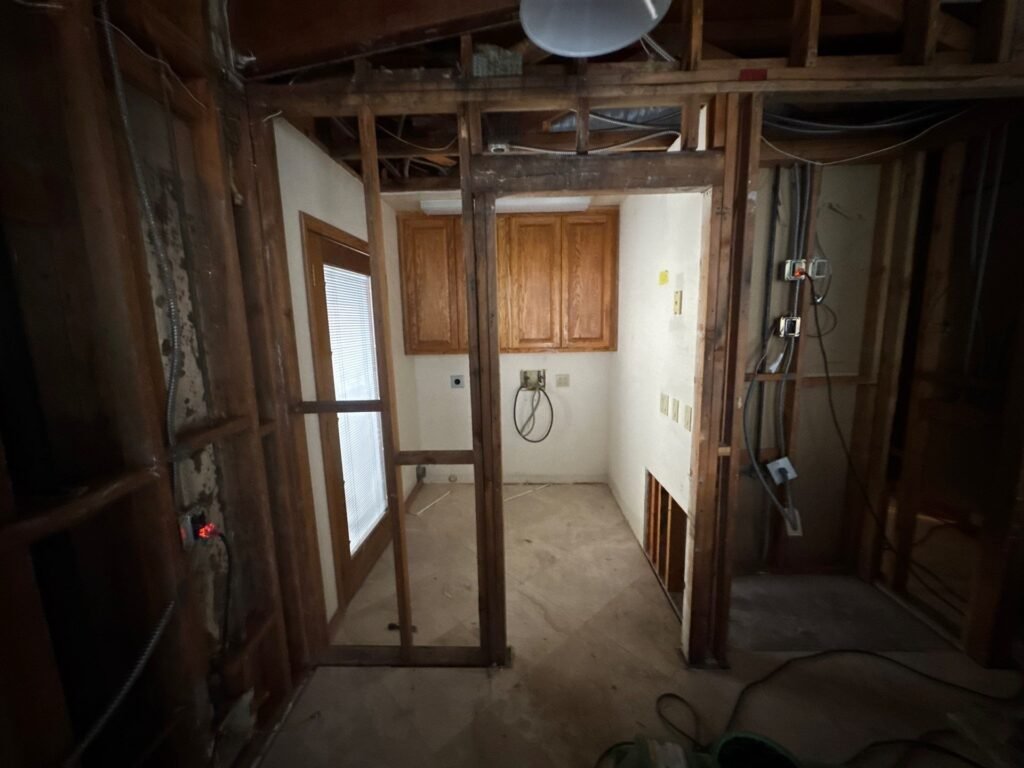
Drywall, texture, paint, insulation, baseboard, flooring, cabinet boxes, and sometimes electrical. Interior scope on a moderate leak regularly runs five to fifteen thousand per unit. If water has traveled down a wall cavity from the third floor to the first, you are now repairing three units instead of one.
Mold Remediation and Liability
Once moisture sits longer than about forty eight hours, you are in remediation territory, not repair territory. Remediation means containment, air scrubbers, disposal, clearance testing, and documentation. It also means exposure. Habitability claims and mold litigation are expensive, slow, and they follow a property for years.
Insurance and Deductibles
You either eat the loss under your deductible, or you file and watch your premium move at renewal. Neither is free. Carriers in Arizona have been tightening on properties with a claims history and aging roofs, and a pattern of water claims can affect what coverage you can even get.
Reputation and Leasing Velocity
A displaced resident writes a review. That review sits on your Google profile while your leasing team is trying to hit occupancy. One detailed one star review about mold and a two week hotel stay does more damage to your leasing funnel than most owners want to admit, and you cannot buy it back.
Staff Time
Your maintenance techs are chasing buckets instead of turning units. Your property manager is fielding calls and coordinating a hotel instead of working renewals. Your regional is on site. That labor is real money, and it never shows up on the roof line item.
Structural Damage and Shortened Roof Life
Every leak you patch instead of solve is rotting decking, saturating insulation, and corroding fasteners. Wet insulation does not dry out under a membrane. It stays wet, it loses R value, and it spreads. Deferred leaks are the single fastest way to turn a roof that had eight years left into a full tear off and replacement. A tarp buys you a week. It does not stop what is already happening under the membrane.
A Seasonal Roof Program for Arizona
None of the above is inevitable. Roofs in Arizona fail in predictable ways on a predictable calendar, and a property on a maintenance program almost never gets surprised.
Spring: Before Monsoon
This is the most important inspection of the year and the best weather window for repairs. Clear every drain, scupper, and gutter. Reseal pitch pans, penetrations, and flashings. Check parapet caps and wall terminations. Verify that HVAC curbs and condensate lines are sound, because that is where a huge share of multifamily leaks actually start.
Summer: Heat and Storms
Extreme heat and UV are brutal on membranes and sealants. Thermal cycling opens seams and laps. Monsoon storms then drive rain sideways into openings that a normal rain would never find, and blowing debris clogs drains overnight. A mid season walk after the first major storm catches what moved.
Fall: After Monsoon
Full post storm assessment with photo documentation. This is when you find the wind lifted edge metal and the punctures from debris, and it is your window to fix them before winter rains.
Winter: Slow Rain, Slow Drying
Steadier, longer duration rain finds slow leaks that a fifteen minute monsoon burst never will. Cooler temperatures also mean slower drying, so small problems become mold problems faster.
Two documented inspections a year, plus a walk after the first big storm, with photo reports you can hand to ownership. That is the entire program. It costs a fraction of one displaced resident.
What We Recommend
Get a real condition assessment with remaining useful life on every roof in your portfolio, so you can budget a replacement instead of reacting to one. Put the high risk roofs on a scheduled maintenance agreement. Where a roof has life left but is showing age, a fluid applied coating system can add ten to fifteen years for a fraction of replacement cost and comes with a manufacturer warranty. And have a roofer you can actually reach when a storm hits at nine on a Friday night.
Call American Exterior Systems
American Exterior Systems is a dual licensed general contractor working with multifamily and commercial properties across Arizona and the Southwest. We handle roof inspections and condition reports, leak diagnostics, repairs, maintenance programs, coatings, and full replacement, along with the interior repairs when water has already gotten in.
If you have a roof you are worried about, or a portfolio you would rather get ahead of than react to, call us at 480-707-3707 or reach out through our contact page. We will walk it, document it, and give you a straight answer on what it needs.