
Every resident on your property uses the stairs, breezeways, and walkways every single day. That makes them the most used structure on the site, and one of the most overlooked. A loose railing or a soft stair tread rarely shows up on a budget until someone gets hurt.
At American Exterior Systems, we inspect and repair exterior stairways, landings, balconies, and walkways for multifamily and commercial owners across Arizona and Utah. Here is what we want every owner and property manager to know before a small problem becomes a claim.
Why Stairs Fail Faster in the Southwest
Desert conditions are hard on exterior stairs. Summer surfaces can pass 150 degrees, then monsoon storms push water into every crack. That cycle loosens fasteners and opens paths for moisture.
The most common failures we find on our inspections:
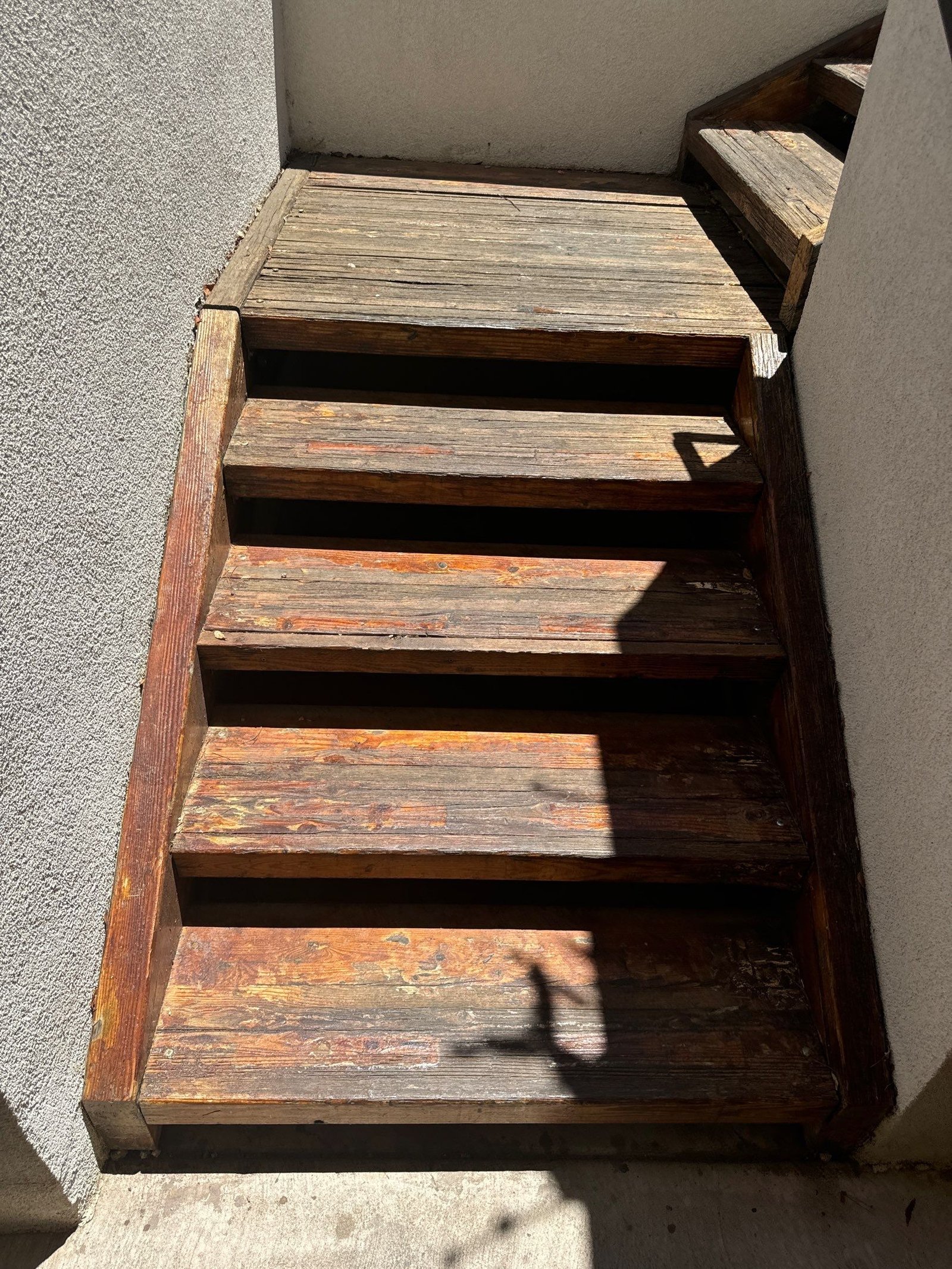
- Wood stringers and treads that check, split, and rot where they meet concrete or sit near irrigation.
- Steel posts and base plates that rust from the bottom up, often hidden under paint or stucco.
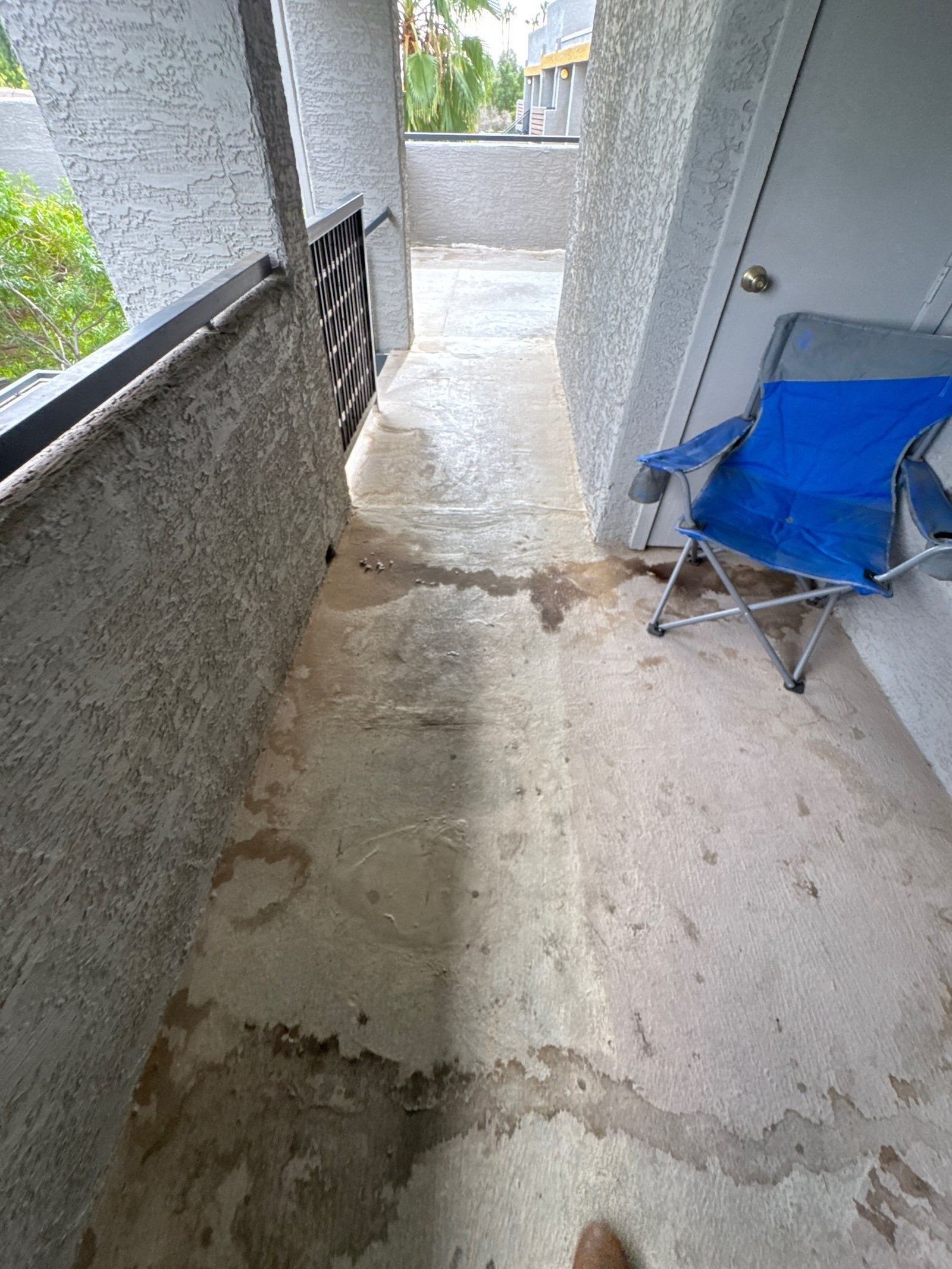
- Landings and walkway decks where failed waterproofing lets water reach the framing below.
- Concrete treads and nosings that crack or spall, creating trip edges.
- Railing anchors that work loose from years of heat expansion and daily use.
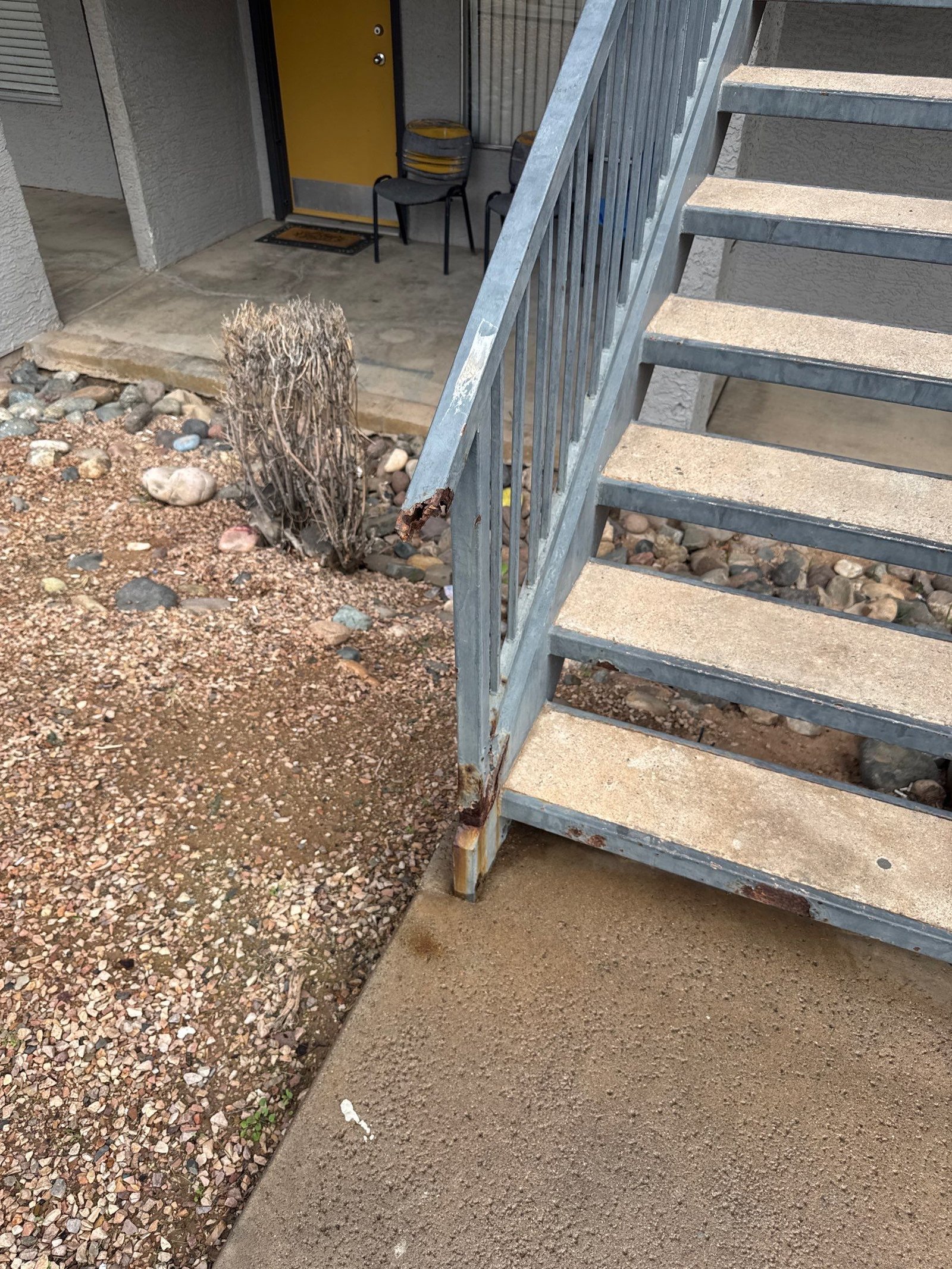
Most of this damage starts out of sight. By the time a railing wobbles, the problem underneath is usually bigger than it looks.
The Code Numbers Every Owner Should Know
Phoenix adopted the 2024 International Building Code, effective August 1, 2025. Other Arizona and Utah cities may be on an earlier edition, so always confirm with your local building department. For common areas on multifamily and commercial property, these are the key requirements:
| Requirement | What the code calls for |
|---|---|
| Guard height | 42 inches minimum where the drop is more than 30 inches |
| Handrail height | 34 to 38 inches above the stair nosings |
| Guard openings | A 4 inch sphere cannot pass through, up to 36 inches high |
| Upper guard openings | A 4 3/8 inch sphere cannot pass, from 36 to 42 inches |
| Stair side triangle | A 6 inch sphere cannot pass between tread, riser, and bottom rail |
| Handrail grip | 1 1/4 to 2 inch diameter for round rails |
| Top rail strength | 200 pound concentrated load and 50 pounds per linear foot |
| Risers | Closed risers on most commercial and multifamily stairs |
Here is the catch. Many communities built in the 1980s and 1990s were designed under older codes that allowed larger openings and shorter guards. A railing that passed inspection 30 years ago may not meet today’s standard. The 4 inch rule exists for one reason: it is roughly the size of a small child’s head.
Warning Signs to Look for on Your Next Walk
You do not need to be a contractor to spot trouble. Walk your stairs and breezeways with this list:
- Railings that move when you push on them
- Rust stains or bubbling paint at the base of steel posts
- Soft, spongy, or cracked stair treads
- Stucco cracks or water stains where stairs connect to the building
- Cracked or missing concrete on treads, nosings, or landings
- Peeling or blistered coating on walkway decks
- Gaps between balusters wider than 4 inches, about the width of a softball
- Handrails missing on one side, or ending before the last step
- Open risers on common area stairs
If you check even one box, it is worth having someone take a closer look.
The Liability Side: What Happens After a Fall
When a resident or guest falls on a common area stair, the first questions are always the same. Was the owner aware of the condition? Was it maintained? Did it meet code?
Work orders, resident complaints, and past inspection reports can all become evidence. A loose railing that was reported and left alone is far harder to defend than one that was repaired the week it was found. Fall claims on stairs and balconies can involve medical costs, insurance increases, and years of legal exposure.
The cheapest stair repair is the one done before the incident. Documented inspections and timely repairs are one of the best protections an owner has. This article is general information, not legal advice. Talk with your attorney and insurance carrier about your specific exposure.
Repair or Bring It Up to Code?
Existing stairs are often allowed to stay as built, as long as they are safe and maintained. That changes once you start replacing parts. In most cities, anything you rebuild has to meet the current code, even if the rest of the stair stays original.
We saw this firsthand on a recent Scottsdale staircase replacement. The city allowed the existing handrails to remain because we were not touching them, but every new riser had to be built to current code. Knowing those rules before the bid keeps change orders off the table.
On structural stair and walkway work, expect these steps:
- Inspection and scope. We document the condition with photos and drone imagery.
- Engineering. A licensed engineer reviews the structure and stamps the repair drawings.
- Permits. We pull the permit with your city and coordinate inspections.
- Phased construction. Stairs stay open where possible so residents can still get home.
- Final inspection and closeout. You get the signed off permit for your records.
That permit file is valuable. It is proof the work was done right.
How AES Can Help
American Exterior Systems is a Phoenix based, dual licensed general contractor serving multifamily and commercial properties across the Southwest. Structural repair of balconies, stairways, landings, and framing is one of our core services. We handle the full job under one contract: inspection, engineering, permits, railing upgrades, framing and concrete repair, waterproof deck coatings, and the final paint.
For owners, that means one point of contact, one schedule, and a permitted, code compliant result you can put in the file.
Not sure where your stairs stand? Call us at 480.707.3707 or request a stair and walkway assessment. We will walk the property, document what we find, and tell you honestly what needs attention now and what can wait.